


Name: Smart Safeguard for Bright Vision: Aier Eye × Suzhou Kangqi Secure Operating Room Air Safety
Release Date: 2025-05-08 03:05:16
Click count: 814

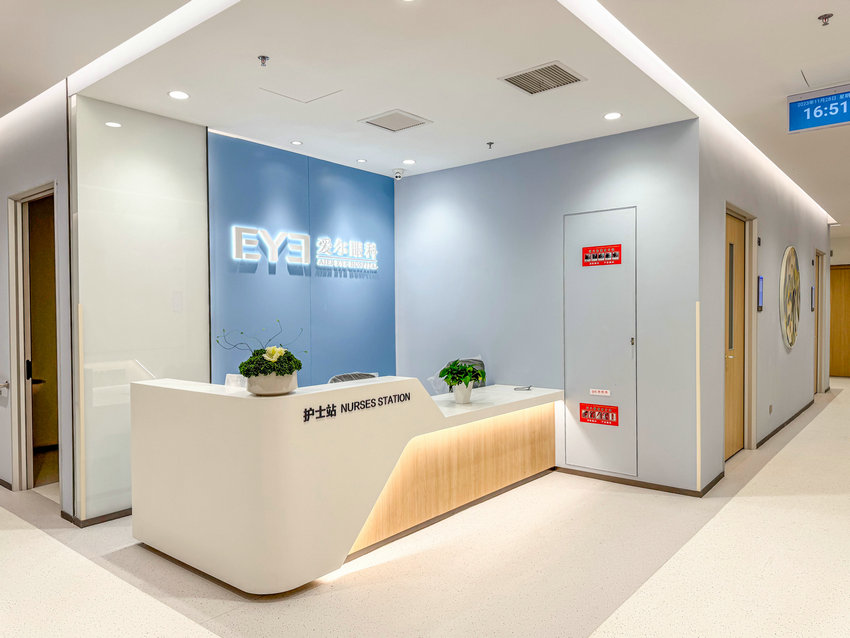
In the precision-driven operations of ophthalmic surgery, operating room air quality acts as a critical "invisible factor" governing surgical outcomes. During daily operations, Aier Eye Hospital Group identified a critical flaw in traditional air monitoring solutions: their inherent time lag prevents real-time tracking of particulate matter fluctuations within surgical zones, leaving blind spots in post-operative infection risk control.
Per research documented in Nosocomial Infection Management and Control in Ophthalmic Operating Rooms, excessive airborne particulate concentrations can raise ophthalmic surgery infection rates by 30% to 50%. Intraocular procedures such as cataract surgery and corneal transplantation demand Class 100 cleanroom standards for sterile environments. Developing precise, intelligent monitoring and control systems for surgical environments has therefore become a core priority for Aier Eye Hospital Group to elevate patient medical safety.
Ophthalmic surgeries demand micron-level operational accuracy. Airborne particulate matter measuring ≥5μm may carry pathogenic microbes including bacteria and fungi. Direct contact between such particles and surgical incisions or intraocular tissues can trigger severe complications such as bacterial endophthalmitis and corneal ulcers.
Unlike general surgical procedures, ophthalmic incisions are typically smaller than 3mm. Intraocular tissues feature limited blood supply and weak immune defenses; any infection may result in permanent vision loss or even enucleation of the eyeball.
1. Low Efficiency of Manual Testing Traditional offline particle counters require scheduled manual sampling, failing to cover the full surgical workflow and creating persistent monitoring blind zones.
2. Delayed Data Feedback Test results take several hours to generate, making it impossible to detect sudden contamination incidents in a timely manner.
3. Inadequate Spatial Coverage Single-point measurements cannot reflect the overall cleanliness of the surgical area and are easily skewed by dynamic variables including staff movement and medical equipment operation.
Post-surgical infections not only impose additional financial burdens and physical suffering on patients but also damage hospital reputation and undermine the integrity of medical safety management systems. As a globally networked ophthalmic medical institution performing over one million surgeries annually, Aier Eye Hospital Group requires a standardized, intelligent operating room environmental monitoring system as an indispensable safeguard for patients’ eye health.
Tailored to Aier Eye Hospital Group’s unique operational needs, Suzhou Kangqi Environmental Technology Co., Ltd. has developed an "All-Time Online + Intelligent Interconnection" solution built around laser particle counters integrated with IoT technology, delivering three core functionalities:
1. Real-Time Multi-Channel Particle Size Monitoring Simultaneously measures concentrations of particles with diameters of 0.3μm, 0.5μm, 1.0μm, 3.0μm, 5.0μm and 10μm, fully complying with ISO 14644-1 cleanroom classification standards.
2. Micron-Accurate Sensing Technology Adopting laser light scattering principles, the system achieves a detection sensitivity of 0.1 cfu/m³ and delivers real-time readings of particulate counts per liter of air within surgical zones.
3. Multi-Dimensional Visualized Data Analytics A dedicated software platform displays real-time particulate concentration curves across all operating rooms, over-limit alert logs and retrievable historical data, with synchronized access available on both PC and mobile terminals.
1. Pre-Surgery Environmental Pre-Assessment Automatic monitoring activates one hour prior to scheduled procedures. Operating room access permissions are only unlocked once cleanliness benchmarks are met, eliminating surgical delays caused by pre-operative contamination.
2. Intra-Operative Dynamic Supervision To address variable pollution sources such as staff circulation and equipment startup/shutdown during surgery, the system conducts automatic sampling every two minutes. Instant audio-visual alerts trigger when particulate concentrations spike (exceeding 100 cfu/m³), prompting clinical staff to deploy air purification protocols immediately.
3. Post-Surgery Effect Validation A comprehensive environmental monitoring report is generated upon procedure completion, featuring analysis of peak particulate concentration periods and potential contamination pathways to provide data-backed guidance for optimizing post-operative disinfection workflows.
Leveraging Suzhou Kangqi’s proprietary patented "Environmental Inspection Robot" technology (Patent Publication No. CN 222644615 U), the solution enables automated deployment of monitoring hardware with the following capabilities:
· Adaptive Height Adjustment Screw drive assemblies enable automatic height regulation ranging from 0.5 to 2 meters, covering critical monitoring points including operating tables, instrument stands and staff activity zones.
· Full-Time Protective Structure When idle, the particle counting unit automatically retracts into a composite protective enclosure, shielding hardware from contaminated ambient air and extending sensor service life.
· Mobile Circular Monitoring Equipped with automated guided vehicles (AGVs), the system conducts rotational inspections across multiple operating rooms, resolving spatial limitations inherent to traditional fixed-point monitoring setups.
Following system deployment, the frequency of excessive particulate concentration readings in pilot Aier Eye hospitals dropped by 67%. Post-operative infection rates fell from 0.32% to 0.11%, meeting Class I environmental criteria specified in the National Hospital Disinfection Sanitation Standard (GB 15982-2022).
A chief ophthalmologist at a Grade A tertiary hospital commented: "Spontaneous post-op corneal edema cases we encountered in the past have been fully eliminated, as the precise monitoring system allowed us to promptly identify and resolve contamination originating from air conditioning filters."
1. Reduced Monitoring Expenditure Manual testing frequency was cut from four daily rounds to one, driving a 40% reduction in equipment operation and maintenance costs.
2. Data-Driven Decision Support Comparative analysis of historical data accurately identifies periods of suboptimal air purification system performance. This insight shortened air handling unit maintenance cycles from three months to two, delivering a 25% reduction in energy consumption.
3. Streamlined Regulatory Compliance Auto-generated monitoring reports integrate seamlessly with hospital infection control platforms, satisfying compliance requirements for JCI accreditation and Grade A hospital evaluation audits.
The strategic partnership between Aier Eye Hospital Group and Suzhou Kangqi has established an industry benchmark for precision infection control in ophthalmic care. The proven solution has been rolled out across more than 300 hospitals within Aier’s network and attracted numerous Grade A tertiary hospitals for site visits and technical exchange.
A project manager from Suzhou Kangqi stated: "We implemented targeted optimizations including noise reduction and electromagnetic interference resistance for equipment, tailored to the unique operating environment of ophthalmic surgery. This ensures monitoring data remains unaffected by surgical machinery, which has proven pivotal to the successful full-scale implementation of our solution."
Driven by the Healthy China 2030 Initiative, intelligent monitoring of medical environments has emerged as an irreversible industry trend. The collaboration between Suzhou Kangqi and Aier Eye Hospital Group transcends single-scenario infection control, pioneering a full closed-loop solution framework: Precision Monitoring → Intelligent Data Analysis → Closed-Loop Governance.
Against the backdrop of rapid advancements in ophthalmic medical technology, every detail—from nanometer-precise surgical instruments to micron-level operating room environmental regulation—shapes patients’ vision health and quality of life. The partnership between Aier Eye and Suzhou Kangqi stands as an exemplary application of technological innovation safeguarding clinical safety, offering a replicable "Chinese Solution" for ophthalmic operating room environmental management worldwide.
As laser particle counters cast light through operating room air, they capture far more than micron-scale airborne particles—they embody an uncompromising pursuit of clinical safety. On the journey toward smart healthcare, rigorous attention to every minute detail represents a steadfast promise to protect patients’ precious sight.
Address: 2nd Floor, Building E, No.60 Chuangye Street, Suzhou High tech Zone
Phone: 18151789348
Fax: 400-728-7728
Website: www.kqet.com. cn
Email: popularize@kqet.com.cn

 苏公网安备32050502012040